
Whenever my kids are testing my limits, I resort to books. Books are always my answer to a problem – or at least the first answer. Good parenting books are a great source to get re-inspired and to remind yourself of the principles of parenting you want to adhere to.
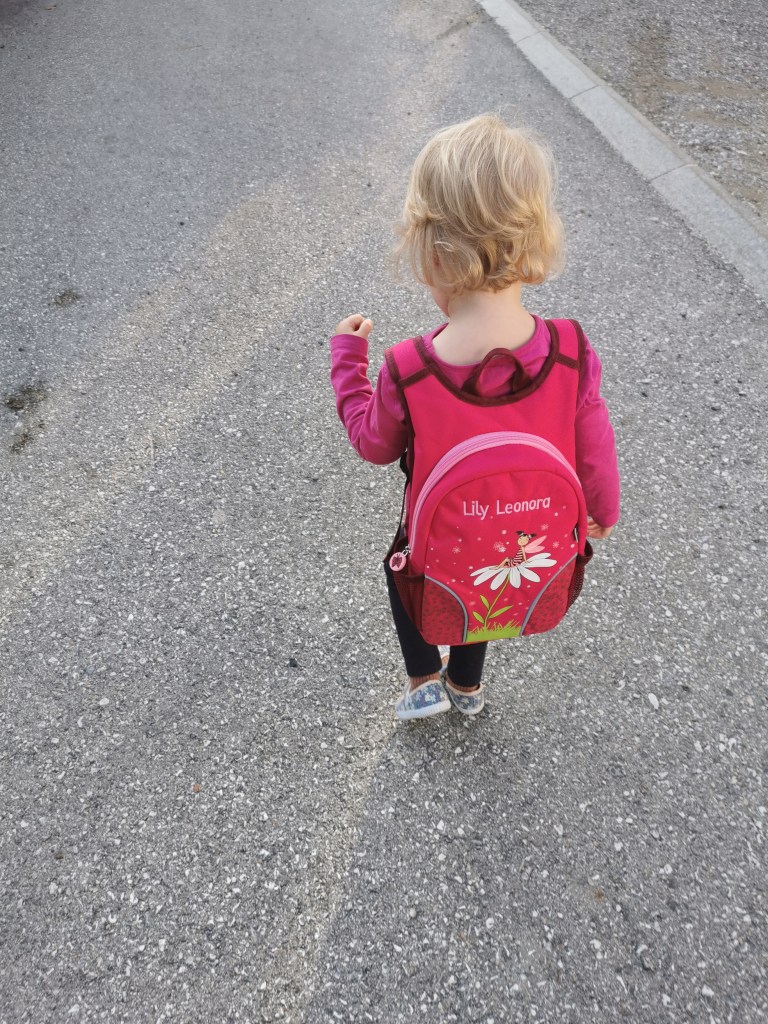
My daughter is now three-and-a-half and I can honestly say, I’m not enjoying her company right now most of the time. Of course, as a mother, you’re not supposed to say that, but I am still going to. She’s grumpy a LOT, hits me, antagonises her brother and generally brings an ambience of stress and anxiety into our house. My educated theoretical brain has a manifold of answers to this kind of behaviour: she’s teething, she’s growing, you’re unbalanced and that is why she’s unbalanced, it’s the transitional seasons, etc. etc. With children there is always a plethora of options, and until you have figured out what triggered their phase of unpleasant behaviour, it’s usually already over.
Sadly, however, there isn’t just the educated part of our mum brains. There is the emotional one, too, and, boy, is my emotional part overwhelmed. I feel anger simmering constantly underneath, waiting to be unleashed, and it takes a lot of resilience and patience to keep it calm – and more often than not, I don’t.
But let’s get back to the book-reading. In a desperate attempt to salvage the atmosphere in my house, I took out my parenting books and one of them is “The Montessori Toddler” by Simone Davies. It’s a lovely book on the Montessori approach, and in the intro she writes something along the lines of: toddlers are misunderstood, they are labelled as difficult when they just need our support and a child-appropriate environment.
I resonate with every syllable of this statement. And, yet, being in the trenches, living my daily life with two toddlers, I felt resentment towards the sentiment for a moment. Because, you know what, toddlers can be extremely difficult to handle. Their behaviour is oftentimes erratic, mean and incomprehensible to an adult brain that has been carefully sculpted to share, show grace and suppress impulses that could hurt others.
While my theoretical brain keeps telling me: “she doesn’t mean to hurt others, she just can’t operate differently at this point”; my emotional side feels betrayed, personally offended and simply angry. All the sentences from the many books I’ve read repeat in my head: “When I accepted her for who she was, she didn’t have temper tantrums anymore”, “there are three-year-olds who go without any temper tantrums for days”, and “when she gets angry, I just leave the room and breathe before I return calmly”. And here I am, trying my best, reading the books, doing the work and she STILL has temper tantrums and I cry in front of her, yell at her, angrily dump her in her room and close the door (I don’t lock it). I am failing, bottom line.
Of course I do know that yelling, threatening and ignoring her are no ways to improve her behaviour. It’s only more exhausting for me and creates tension throughout the household, but when desperation hits, we resort to our basic response impulses, and mine is walking away and feeling anger. It was only recently that I realised that the primal emotion I am experiencing in such a situation isn’t anger, it’s desperation. I’ve exhausted all options, used all the arrows in my parental quiver, and, still, nothing works. And then come the strong responses.
At nights, I am wrestling inwardly to find the right answer to this conundrum, but I feel the ever-gentle parent act comes with particular challenges that make it almost impossible to react calmly and evenly at all times, and I would like to outline them here in the next few paragraphs. Please note the reasons for your responses are very individual and you should always take what feels good to you and that what worked for me doesn’t need to work for you.
Where’s My Village?
I am sure you know the phrase “it takes a village to raise a child”. We’ve all heard it, we all know it – and yet we mostly raise our children alone. One to two people, but even if there are two people, the mother is usually the primary caregiver. If I imagine I spent the entire day in a community of women, the children playing together, the women taking turns cooking, doing laundry, chatting with each other, living life together, I can imagine the tantrums from my side and my children’s side decreasing dramatically. If I could vent here and now, if my kids had daily age-appropriate playmates, we would all do a lot better.
It Takes Two (to Make Mummy Angry)
When I read parenting books, beautiful examples are outlined, where the mother bends down calmly and addresses the child’s need with sweet-natured, dulcet tones that border on poetic skill. When I read that – while my kids are snoring gently beside me, calm and rested – I can fully appreciate them, but I feel they are very insufficient. I’ve noticed that many parenting books give you examples when ONE child is involved (often because the author only has one). But what if you have more kids? What if it’s their fifteenth bickering of the hour? What if one is screaming and the other one keeps antagonising the first one? What if your nervous system is already in complete overload? How can you channel your inner fucking poet then?
These examples often leave me frustrated because we don’t live in a perfect world where your toddlers take turns freaking out, and you’re in the middle. Recently, I’ve had to intervene between Lily and Finn every single time they interacted with each other, and in 90% of the times her behaviour was the cause of the problem. Eventually, it goes from a gentle: “I see you two are upset, do you want to tell me what happened?” to yelling “Holy fucking cow, can’t you two just get on with each other for two freaking minutes???” Which, of course, triggers guilt and leads to even less of a positive vibe in the home.
So I’m Supposed to Take Care of Myself, Too?
I recently read something on an Instagram reel that resonated deeply with me. As a mother – or any person not living behind the moon – I am sure you’ve come across “self-care”. Take care of yourself so you can take care of others. While the idea of self-care is a valid one, the execution for mothers is often lacking and insufficiently supported. The reel said, “society wants us (mothers) to take self-care, so society doesn’t have to care about us.” That hit hard because it’s true. Instead of setting up systems that actually help families – in particular mothers as primary caretakers – we tell them to just enjoy a cup of tea by themselves now and then, get up 15 minutes earlier than their children and light a scented candle once in a while. While the way families function doesn’t change AT ALL.
Last weekend, I told my husband I wanted to “self-care”, i.e. take a bath, lie in bed afterwards and read a book, and not be disturbed. While I was in the bathroom, my son started banging against the door and screaming for me and it took my husband a full five minutes to respond to that and take him away. I heard the yelling and screaming all across the apartment – suffice to say, my bath wasn’t very calming.
When I went to bed to lie down, the kids were in the garden with their dad, but around six fifteen, I noticed that they weren’t coming in even though it was high-time to get them ready for bed. When I came out, the house was a mess. Dinner wasn’t even being prepared, the kids were hyper because they were running around, and the mood was sinking as they entered into “overtired state”. I quickly whipped up some dinner, quietly seething inside. Bedtime was a catastrophe because the kids were so overtired they weren’t cooperative anymore, and we ended the day with tantrum and tears and a messy house.
And all because I wanted two hours to myself.
I am not writing this to shame my husband, but I want to illustrate that THIS is NOT self-care. Taking a shower, being able to do your yoga practice or whatever you like doing should not be registered as your self-care, but as your most basic needs. Also, self-care doesn’t mean you don’t need support. Two hours here and there don’t make up for the vast mental load we mothers carry. We don’t need SELF-care, we need help.
So What Should I Do?
Outlining all the reasons why it’s not working, doesn’t help you or me. Or maybe it does, knowing someone feels the way you do. I wish I could tell you what to do, but I feel like playing the usual hits of: find yourself a parent support group, hire a cleaning lady, or take a fucking bath won’t really help you, so I will refrain from it.
So what to do? I think that KNOWING you have to raise your family in an insufficient system already helps. Because it also means you employ what you need to in order to get through the days where it sucks. May it be the ice cream to lure them home, TV time to get a breather, or having a meltdown in front of them because you just can’t do this anymore. And, as the mama bear you are, you will pick yourself up again and be mother, for that is who we are.
Finally, and I know I’m on the advice-giving roll again, but it is true for me: seek help. My temper flares up regularly enough at the moment that I have decided it’s time to seek professional help to work through my thoughts and feelings. I went to therapy a few years ago and it helped me tremendously. I have realised that many of my misplaced emotions have nothing to do with my children but with my own personal issues (oh, reeeaaaallly), and if I need plenty of energy permanently dealing with those inside of me, I have less energy to give to my family and the people that matter to me. Ticking off your personal issues one at a time can help to become this calmer self – but remember, mama, having toddlers just IS exhausting at times.
Thanks for reading. x, Anja

 Mama Bear Tales
Leave a comment